
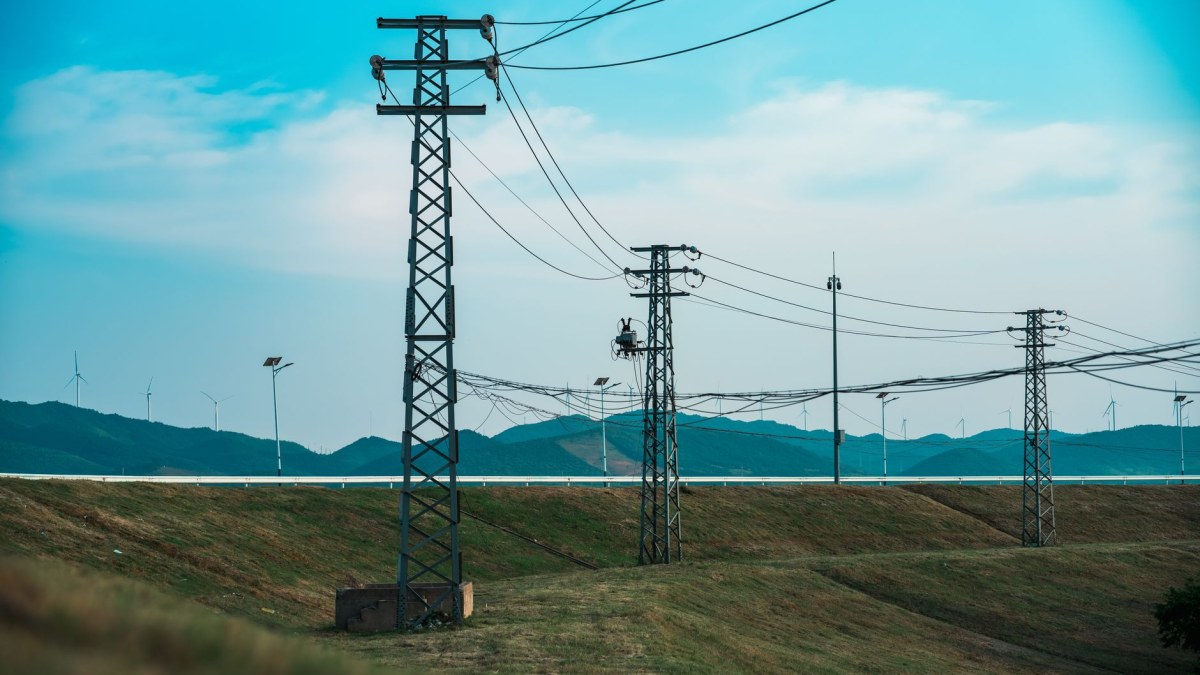
The clean energy transition is generating more solar and wind power than the grid was ever built to handle, and the bottleneck is not ambition or investment — it is infrastructure. Understanding what needs to change, and why the old wiring simply cannot carry the future, is the most urgent technical question of our generation.
In This Article
- Why grids designed for centralised fossil-fuel generation are structurally incompatible with renewable energy sources
- What long-duration energy storage actually means and why lithium-ion batteries alone cannot solve the problem
- How grid-enhancing software is unlocking hidden capacity in transmission lines that already exist
- Why high-voltage direct current transmission is no longer a niche technology but a strategic necessity
- What smart inverters do and why they are the unsung hardware of the renewable revolution
There is a paradox sitting at the centre of the clean energy transition that rarely gets the attention it deserves. Solar panel installations are breaking records. Wind turbine capacity is expanding across continents. Investment in renewable generation has, by almost every measure, accelerated beyond what most analysts predicted even a decade ago. And yet, in grid control rooms from California to Germany, operators are increasingly forced to do something that sounds almost absurd: they are curtailing renewable energy, switching off wind farms and solar arrays at peak generation moments, not because the power is unwanted, but because the grid has no physical way to move it to where it is needed. The infrastructure meant to carry the clean energy future was engineered for a different world entirely.
A Grid Built for a Different Century
The architecture of the modern electrical grid, both in the United States and across most of Europe, reflects the assumptions of mid-twentieth century energy planning. Power flowed in one direction: from large, centralised thermal plants outward through transmission lines to passive consumers. The physics of that arrangement were stable and predictable. A coal plant or a gas turbine can ramp output up or down on demand. Grid operators knew roughly how much power would be generated at any given moment and could balance supply and demand with relatively blunt instruments.
Renewable generation inverts that logic almost completely. Solar output peaks at midday and collapses at dusk. Wind generation is abundant at night in many regions but can disappear for days. Neither source follows human demand schedules, and both are geographically distributed in ways that old transmission corridors were never designed to accommodate. The best wind resources in the United States sit in the Great Plains, far from the population centres of the coasts. The sunniest terrain in Europe is in the south, while industrial demand is concentrated in the north. Moving electrons from where renewables are plentiful to where they are needed requires a fundamentally different kind of network, not just more of the same wiring.
Long-Duration Storage and the Hours That Matter Most
The conversation about energy storage has, for years, been dominated by lithium-ion batteries, and for good reason. The cost of lithium-ion technology dropped roughly ninety percent between 2010 and 2023, making short-duration storage economically viable at a scale that would have seemed fantastical to earlier engineers. A four-hour battery can smooth out the evening demand peak after solar generation falls off. That is genuinely useful. But four hours is not the same as four days, and four days is precisely the kind of gap that renewable-heavy grids must eventually bridge.
Long-duration energy storage, defined broadly as systems capable of storing power for ten hours or more and ideally for days or weeks, is where the physics becomes more complicated and the commercial landscape more uncertain. The candidates include flow batteries, which store energy in liquid electrolytes held in large tanks and can be scaled by simply adding more fluid volume. There is compressed air energy storage, which uses off-peak electricity to pressurize underground caverns and releases that pressure through turbines when demand returns. There is green hydrogen, which stores energy as a chemical fuel that can be burned or converted back to electricity through fuel cells. Each technology carries its own set of trade-offs around efficiency, cost, geography, and round-trip energy loss. None of them are ready to deploy at the scale the grid requires without continued investment and policy support, but none of them are speculative either. Pilot projects are operating in the United States, the United Kingdom, and Australia, and the engineering problems are tractable. The remaining barriers are primarily economic and regulatory.
What long-duration storage ultimately provides is what grid engineers call "firm" renewable capacity, the ability to guarantee that clean power will be available not just when the sun is shining but during the prolonged low-generation periods that meteorologists call "dark doldrums" events. Without it, grid operators must keep fossil-fuel plants on standby as insurance, which undermines both the economics and the emissions accounting of the transition itself.
Grid-Enhancing Software and the Invisible Upgrade
One of the least discussed but most immediately deployable tools for modernising the grid requires no new steel in the ground at all. Grid-enhancing technologies, a category that includes dynamic line ratings, advanced power flow control, and topology optimisation software, use real-time data and algorithmic decision-making to squeeze significantly more capacity out of transmission infrastructure that already exists.
Dynamic line ratings illustrate the principle clearly. Conventional grid management treats transmission lines as having fixed capacity limits, set conservatively to prevent overheating under worst-case conditions. But a transmission line's actual capacity depends on ambient temperature, wind speed, and solar radiation, all of which affect how quickly the cable dissipates heat. On a cool, windy day, a line rated at 1,000 megawatts may safely carry 1,300 megawatts. Dynamic line rating systems install sensors along transmission corridors and feed real-time environmental data into control software, allowing operators to use the line's true physical capacity rather than a static conservative estimate. Studies conducted by the U.S. Department of Energy and by European transmission system operators have consistently found that dynamic line ratings can increase effective transmission capacity by fifteen to forty percent on existing infrastructure, often at a fraction of the cost of building new lines.
Topology optimisation takes the concept further. Modern transmission networks have multiple parallel pathways, and the routing of power flows through those pathways is not fixed by physics alone. Software can continuously recalculate optimal routing configurations to reduce congestion, minimise losses, and redistribute load in ways that human operators managing legacy control systems simply could not compute fast enough to implement. The Federal Energy Regulatory Commission in the United States has begun requiring grid operators to evaluate these technologies, a regulatory signal that the era of treating existing infrastructure as a fixed constraint is ending.
High-Voltage Transmission and the Geography Problem
Software optimisation can extract more value from existing infrastructure, but it cannot change geography. The fundamental mismatch between where renewable resources are abundant and where population centres demand power requires physical transmission capacity that does not yet exist in sufficient quantity. This is where high-voltage direct current transmission, known as HVDC, becomes not a luxury but a structural requirement.
Direct current transmission has a crucial advantage over the alternating current systems that dominate existing grids over long distances. AC power loses a meaningful fraction of its energy to resistance over every kilometre of cable. The physics of DC transmission result in substantially lower losses over distances exceeding roughly five hundred kilometres, which is precisely the scale at which renewable resources need to be connected to load centres. HVDC lines can also be buried underground or laid as subsea cables far more practically than AC equivalents at equivalent voltage, which matters enormously for routing through densely populated regions or across bodies of water.
Europe's offshore wind buildout has made HVDC a familiar technology there, with interconnectors already linking Norway's hydropower to British and Dutch demand, and more under construction. In the United States, the picture is more fragmented. The country's grid is divided into largely separate interconnections, the Eastern, Western, and Texas systems, with very limited transfer capacity between them. A transmission line connecting the wind-rich central plains to East Coast cities, or a series of HVDC corridors running from the Southwest's solar resources to northern demand centres, would transform the arithmetic of grid reliability. Several such projects have been proposed and some are in development, but permitting timelines measured in decades and right-of-way disputes have slowed progress to a pace that sits in uncomfortable tension with decarbonisation targets.
Smart Inverters and the Hidden Hardware Layer
Every solar panel and wind turbine connected to the grid requires an inverter, a device that converts the direct current produced by solar cells or the variable-frequency AC produced by wind turbines into the synchronised alternating current that the grid operates on. For most of the history of distributed renewable energy, inverters were passive and "dumb" in a specific technical sense: they followed the grid's voltage and frequency signals without participating in the stabilisation of those signals.
This passivity created a subtle but serious problem as renewable penetration increased. Traditional power plants use rotating generators with large physical mass, and that mass provides what engineers call inertia, a resistance to sudden changes in frequency that gives operators time to respond to disturbances. When a large plant trips offline unexpectedly, the kinetic energy stored in spinning turbines across the network cushions the frequency drop for several seconds, buying time for backup generation to respond. A grid dominated by inverter-based resources has less of this physical inertia, and frequency can change more rapidly when something goes wrong.
Smart inverters, also called grid-forming inverters, address this directly. Rather than simply following the grid's signal, grid-forming inverters can synthesise their own reference voltage and frequency, effectively mimicking the behaviour of a synchronous generator through software and power electronics. They can respond to frequency deviations faster than any mechanical system, inject reactive power to support voltage stability, and ride through grid disturbances that would cause older inverter designs to disconnect and make the situation worse. Mandating grid-forming capabilities in new inverter installations is now part of emerging technical standards in several jurisdictions, and retrofitting existing large installations is an active area of engineering and policy discussion.
The Permitting Bottleneck Nobody Talks About Enough
Technology is only part of the constraint. The queue of proposed renewable energy and storage projects waiting for grid interconnection in the United States exceeded 2,600 gigawatts in 2023, according to Lawrence Berkeley National Laboratory analysis. That is more than twice the entire existing installed generating capacity of the country, sitting in administrative limbo. The median project waited five years for interconnection approval, and many never reach completion at all. Europe faces comparable delays in planning and permitting for new transmission infrastructure, with some HVDC projects taking fifteen years from proposal to energisation.
The engineering solutions described in this article are mature enough to deploy. The inverters exist. The software platforms are operational. HVDC technology has been commercially proven for decades. Long-duration storage is moving out of the pilot phase. What is lagging is the regulatory and permitting architecture that determines how quickly these technologies can be integrated into the grid at the speed the climate timeline demands. Interconnection reform, transmission permitting streamlining, and updated grid codes that require grid-forming capabilities are policy questions with profound technical consequences. The engineers have a clearer picture of what needs to happen than the institutions responsible for making it happen seem to, and that gap is where the transition is most at risk of stalling.
What a Modernised Grid Actually Makes Possible
It is worth being precise about what is at stake beyond the abstractions of decarbonisation targets. A modernised grid with robust long-duration storage, grid-forming inverters, HVDC interconnections, and software-enhanced capacity does not just enable more renewable generation. It fundamentally changes the resilience profile of the energy system in ways that have direct consequences for how societies weather extreme events.
The Texas grid failure during the February 2021 winter storm was, at its core, a story about a system with insufficient interconnection to import power from neighbouring grids and inadequate weatherisation of thermal generation. A more interconnected grid with diverse storage resources is intrinsically more robust to the kinds of correlated regional failures that climate change is making more frequent. Similarly, the European energy crisis following the 2022 disruption of natural gas supplies illustrated how dependence on centralised, fuel-dependent generation creates geopolitical vulnerability that distributed, storage-backed renewable systems reduce structurally rather than incrementally.
The clean energy transition is often framed primarily as an environmental project, and it is. But the grid modernisation it requires is simultaneously an infrastructure investment with returns measured in resilience, energy security, and economic efficiency that extend well beyond the climate calculus. The engineers who talk about grid-forming inverters and dynamic line ratings are not speaking a narrowly technical language. They are describing the architecture of a more robust civilisation, and the urgency in their voices reflects an awareness that the window for getting the foundation right is not unlimited.
jordan_bio
Recommended Books
The Grid: The Fraying Wires Between Americans and Our Energy Future by Gretchen Bakke — A compelling narrative examination of why the American electrical grid is structurally fragile and what transforming it for the twenty-first century will require.
Superpower: One Man's Quest to Transform American Energy by Russell Gold — An inside account of the battles over building long-distance transmission lines that could connect America's renewable resources to its population centres.
Energy Storage: A Nontechnical Guide by Richard Baxter — A clear and accessible overview of the full spectrum of energy storage technologies and their role in enabling reliable power systems built on renewable generation.
Article Recap
Modernising the electrical grid for renewable energy integration requires deploying long-duration energy storage, grid-enhancing software for transmission capacity, high-voltage direct current transmission corridors, and grid-forming smart inverters that can stabilise systems with high renewable penetration. The technologies needed to prevent the clean energy transition from stalling already exist at commercial scale, and the most urgent barriers are now regulatory permitting timelines and interconnection queue reform rather than engineering limitations. A resilient, decarbonised grid is also a more secure and economically efficient grid, making infrastructure modernisation one of the most consequential investments societies can make in the coming decade.
#CleanEnergyTransition #GridModernisation #LongDurationStorage #EnergyStorage #RenewableEnergy #HVDCTransmission #SmartInverters #GridEnhancingTechnology #EnergyInfrastructure #EnergyPolicy