
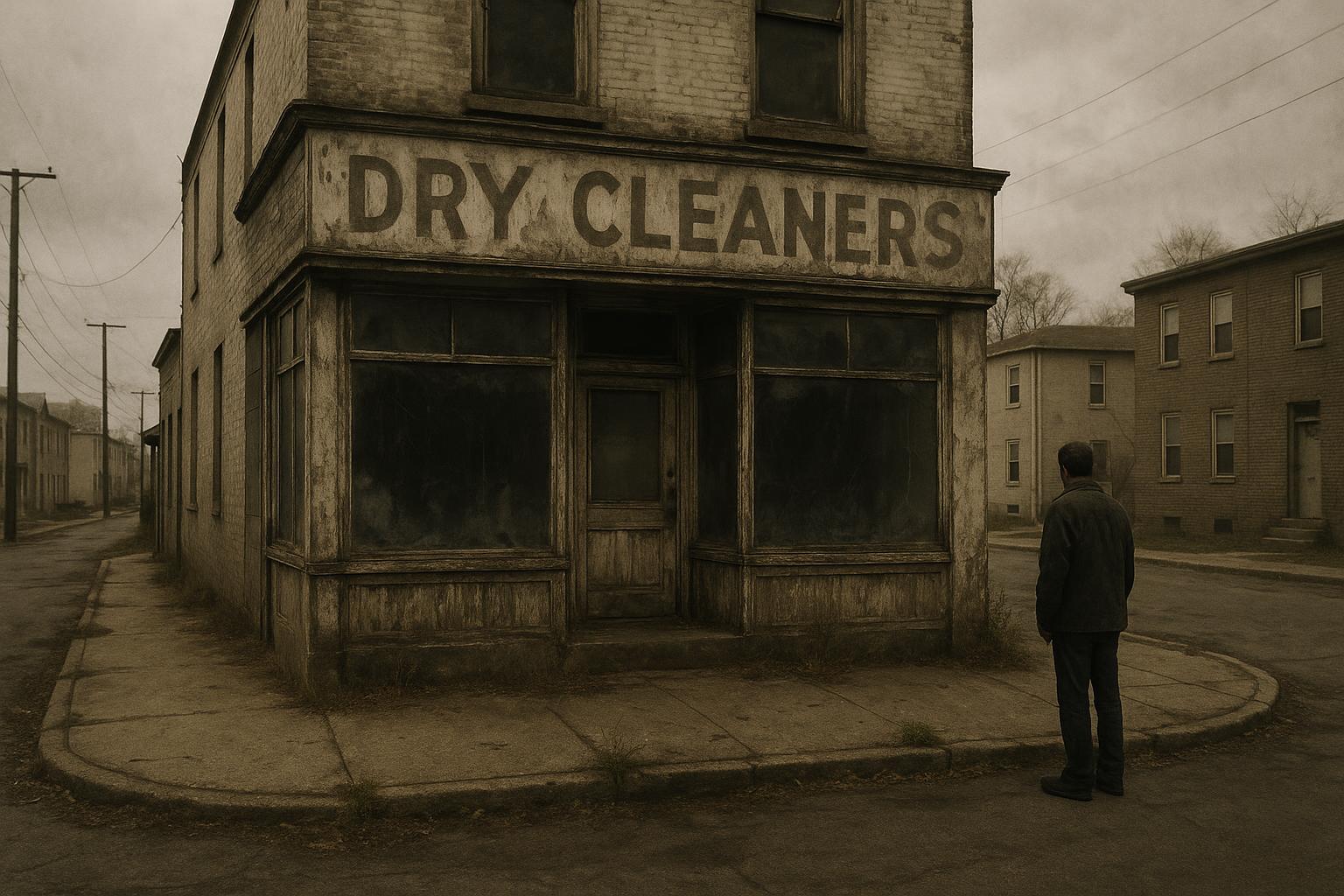
Cities routinely hide decades of toxic pollution because it creeps slowly, underground, and out of sight. A movement of toxic tours, art installations, and graphic novels is now forcing communities to confront the environmental contamination buried beneath their neighborhoods and the injustice that allowed it to spread.
In This Article
- How the Tuchman Cleaners dry-cleaning plume in Indianapolis remained invisible for decades despite EPA knowledge
- The concept of slow violence and environmental amnesia that explains why cities forget toxic histories
- Why contamination disproportionately affects low-income neighborhoods and communities of color
- Cultural responses including toxic tours, art processions, and graphic novels that make pollution visible
- Policy pathways toward public commemoration and equitable environmental remediation
In 1989, environmental inspectors noted volatile organic compounds seeping from a dry-cleaning operation on Indianapolis's Keystone Avenue. Decades passed. By 1994, an underground plume of perchloroethylene (PERC), the solvent Tuchman Cleaners used to clean garments, had contaminated a nearby aquifer. By 2011, when the EPA finally intervened, the plume had spread more than a mile under residential neighborhoods and reached drinking-water wells. The contamination was not a sudden accident. It was slow, creeping, and almost entirely out of public view. This is how environmental injustice works: not as a single catastrophic event but as a gradual poisoning that institutions rationalize away until it becomes impossible to ignore.
The Architecture of Environmental Amnesia
Cities possess a remarkable capacity to forget their own toxic histories. Environmental amnesia is not accidental. It is structural. When contamination occurs gradually, underground, and in low-income neighborhoods, political and economic incentives align to keep it hidden. Dry-cleaning businesses are mobile. Ownership changes hands. Decades pass between the first spill and regulatory action. By the time authorities intervene, the responsible company may have vanished, leaving the neighborhood to absorb the damage.
The Keystone Avenue case reflects a pattern repeated across American industrial cities. Short-lived businesses operate in zones of political and economic vulnerability. Communities lack resources to monitor contamination or demand accountability. Municipal governments depend on tax revenue from industrial operations and avoid antagonizing business interests. The result is a layer cake of invisible toxins beneath residential areas, each one a reminder that some communities are designated as sacrifice zones long before contamination is officially acknowledged.
Slow Violence and the Invisibility of Creeping Toxins
In 2011, the scholar Rob Nixon coined the term slow violence to describe environmental degradation that unfolds gradually, spatially diffuse, and often in ways that existing political and media systems fail to register. Slow violence harms the poor disproportionately because their neighborhoods are more likely to host polluting industries and less likely to attract media attention or regulatory intervention. A chemical spill that kills fish in one week generates headlines. A plume that poisons groundwater across five years remains invisible.
The Tuchman case exemplifies slow violence perfectly. Inspectors detected problems in 1989. The plume reached drinking-water wells in the 2000s. The EPA became involved in 2011. During this two-decade span, residents were unknowingly exposed to PERC, a volatile organic compound linked to cancer, kidney damage, and neurological effects. The contamination was not hidden because of secrecy. It was hidden because slow, spatially dispersed harms to poor communities simply do not register in the political attention economy.
Why Urban Contamination Persists in Plain Sight
Understanding why toxic legacies persist requires examining the structural conditions that enable them. First, industrial uses occur in neighborhoods that lack political power. These are often communities of color and low-income areas where property values are depressed and where residents lack the resources to hire environmental consultants or lawyers. Second, contamination is often invisible. It occurs underground, in groundwater, in soil, in slow releases of chemicals that do not produce immediate, visible symptoms.
Third, and perhaps most damaging, municipal authorities have incentives to avoid confronting contamination. A Superfund designation brings attention, liability, and political risk. Development is stalled. Property values decline further. Agencies face demands for remediation they may not have funds to address. The easier path is quiet remediation, if any, and silence. The result is environmental injustice embedded in municipal governance itself.
Cultural Resistance Through Toxic Tours and Art
A growing movement of communities and artists has begun to counter environmental amnesia through deliberate acts of public commemoration. These initiatives refuse the narrative of silence. Instead, they make toxic legacies visible and repositionable as part of shared urban history and memory. The Ironbound Community Corporation in Newark runs toxic tours that guide participants past an Agent Orange factory site contaminated with dioxin. These tours are not morbid spectacles. They are acts of political education and communal witness.
Similarly, the Urban Pond Procession, which operated from 2008 to 2017 in Providence around Mashapaug Pond and the Gorham Silver site, used ceremonial procession and public gathering to highlight industrial contamination and reclaim neighborhood identity from the narratives of neglect and shame. These initiatives rest on a simple insight: making contamination visible and placing it in the register of public memory transforms how communities understand and claim their own histories. Toxic heritage becomes part of neighborhood identity, not a shameful secret.
Graphic Novels and the Aesthetics of Environmental Justice
Artists and publishers have recognized that toxic histories require new aesthetic forms to reach and move audiences. The graphic novel Tóxico represents an emerging genre of environmental justice storytelling that uses visual narrative to make contamination tangible and personal. Comics and graphic novels bypass the academic register that often surrounds environmental scholarship. They reach younger readers and communities outside university settings. They make toxic legacies visceral rather than merely factual.
The Humanities Action Lab organized the traveling exhibit Climates of Inequality in 2017, bringing together art, scholarship, and community testimony around environmental inequality and climate change. These initiatives share a common strategy: they transform contamination from a technical problem managed by regulators into a public story managed by communities themselves. When a neighborhood sees its toxic history represented in art, commemorated in processions, and documented in graphic novels, the contamination becomes undeniable. It becomes part of what the community owns, claims, and demands accountability for.
Policy Pathways Toward Environmental Justice and Remediation
Converting cultural attention into policy change requires specific institutional interventions. First, cities should mandate environmental justice impact assessments for all development and zoning decisions in neighborhoods with legacy contamination. These assessments must include community participation and public disclosure of findings. Second, municipalities should establish toxic heritage registries that document contamination sites, timelines, and remediation status. These registries become tools for neighborhood organizing and media accountability.
Third, cities should fund community-based toxic tours and environmental education programs as part of municipal cultural budgets. These programs should include youth employment and provide training in environmental science and advocacy. Fourth, remediation timelines should be accelerated through dedicated funding streams and federal-state partnerships that do not saddle low-income municipalities with the full financial burden of cleanup. Fifth, public health agencies should conduct blood-lead and chemical-exposure testing in neighborhoods with legacy contamination, making health impacts visible and quantifiable.
The Tuchman case in Indianapolis remains instructive. Decades of delay created exposure risks that may never be fully reversed. If we understand environmental injustice not as occasional accidents but as structural features of how cities develop, we recognize that prevention through early detection, public awareness, and aggressive remediation is the only defensible policy path.
jordan_bio
Recommended Books
Slow Violence and the Environmentalism of the Poor by Rob Nixon — An essential examination of how environmental harm to poor and marginalized communities unfolds gradually and often invisibly to dominant institutions and media systems.
Contaminated Communities: The Social and Psychological Impacts of Residential Toxic Exposure by Alice Mah — Explores how communities live with and resist environmental contamination, combining sociology, psychology, and environmental justice frameworks.
Toxic Legacies: Pollution and the Politics of Life by Elizabeth Kryder-Reid — Investigates how contamination becomes embedded in urban landscapes and how communities document and reclaim toxic heritage through cultural practice.
Article Recap
Environmental amnesia allows cities to hide decades of toxic pollution because contamination creeps slowly, underground, and disproportionately affects low-income communities and communities of color. The Indianapolis Tuchman Cleaners case demonstrates how slow violence and institutional incentives combine to delay accountability and public awareness. Toxic tours, art installations, and graphic novels are now forcing communities to confront buried contamination and demand equitable remediation and public commemoration of environmental justice struggles.
#environmentaljustice #toxicheritage #slowviolence #pollution #Superfund #publicmemory #environmentalamnesia #toxictours #communityactivism #urbandevelopment