
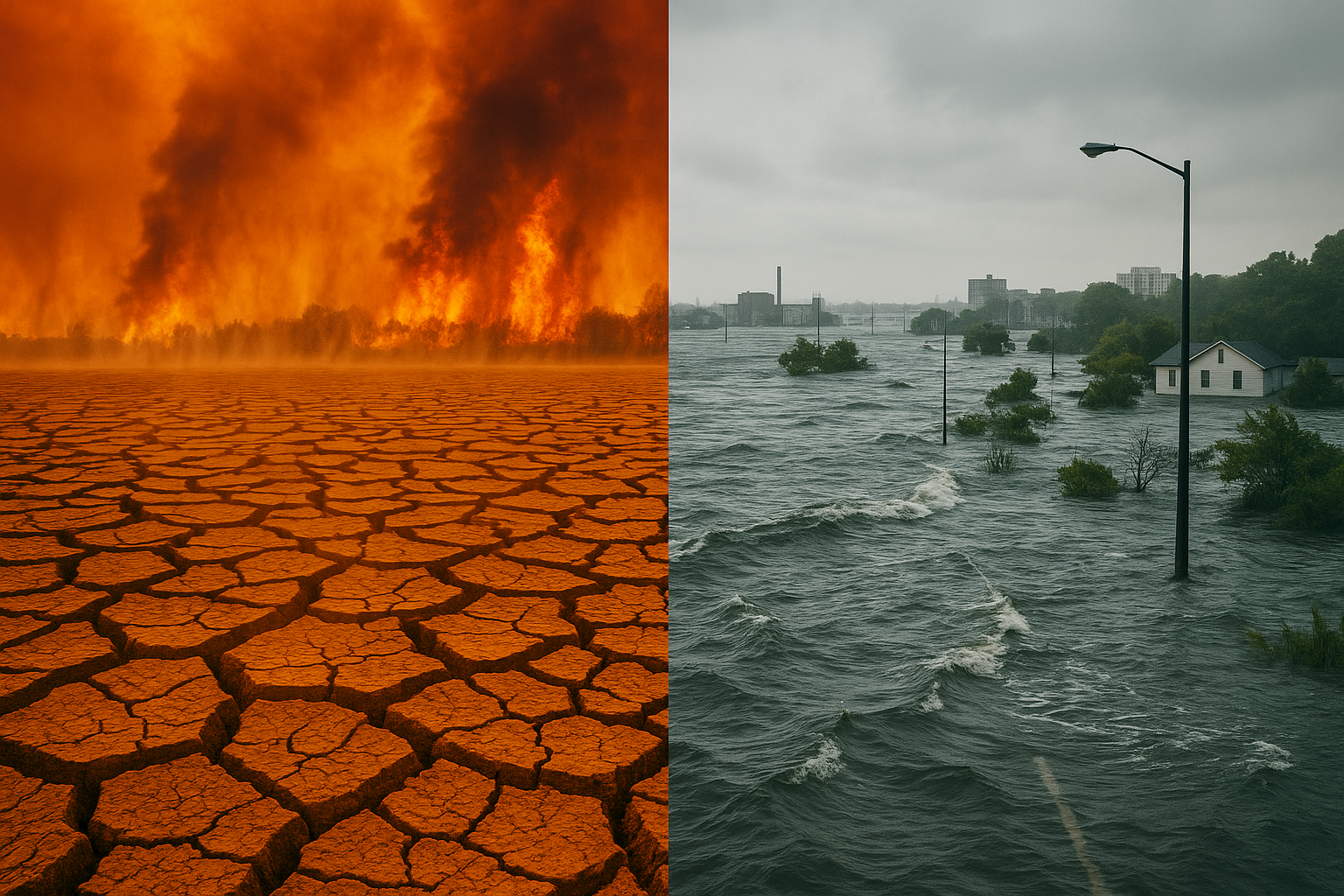
Four compelling videos expose the escalating realities of our climate emergency: runaway heat and feedback loops, catastrophic impacts at 3°C warming, decades of fossil-fuel industry deception, and a human-driven extinction event unfolding now. Together, they paint a picture of crisis and opportunity that demands immediate action.
In This Article
- How extreme heat amplifies through self-reinforcing feedback loops that accelerate planetary warming
- What a 3°C temperature rise means for coastal cities, food systems, and species survival
- Evidence that major oil and gas companies knew about climate risks as far back as the 1970s and funded misinformation
- Why current extinction rates mirror previous mass extinction events and what the Great Acceleration reveals
- Concrete political and technological actions that can still change the trajectory of this crisis
The climate crisis is no longer a distant threat or a problem for future generations. It is the defining challenge of this moment, playing out in real time through intensifying heat waves, devastating floods, prolonged droughts, and ecosystem collapse across every continent. Four recent videos synthesize the most urgent dimensions of this emergency, drawing on scientific evidence, investigative journalism, and paleoclimate data to illustrate why the clock is ticking and what we must do about it.
The Age Of Extreme Heat And Planetary Feedback Loops
The first video in this sequence examines the unprecedented acceleration of global temperatures and the feedback mechanisms that threaten to lock in runaway warming. Heat extremes, wildfires, and severe storms are increasing in both frequency and intensity globally, no longer treated as aberrations but as the new normal. What makes this particularly dangerous is not just the heat itself but the self-reinforcing cycles it triggers: permafrost thaw releases methane and carbon dioxide, reduced snow and ice cover decreases the planet's reflectivity (albedo), and warmer oceans absorb less carbon dioxide and release more. These feedback loops operate like a thermostat spiraling upward, each effect accelerating the next. The scientific consensus, documented by the Intergovernmental Panel on Climate Change (IPCC), confirms that we are already experiencing the early stages of these cascading effects. The urgency stems from the fact that once these mechanisms fully engage, human intervention becomes exponentially harder.
Three Degrees Of Warming And Planetary Tipping Points
The second video visualizes what a 3°C rise in global average temperature would mean across the world's most vulnerable regions and populations. Current international climate pledges, if fully implemented, would still result in approximately 2.7°C of warming by 2100, placing us firmly in the danger zone of this scenario. A 3°C world would see major changes in sea levels, with multi-century projections showing inundation affecting low-lying coastal cities and island nations. Coastal megacities including New York, Tokyo, and Sydney face severe disruption and long-term habitability challenges under this warming level, though timelines depend on emissions pathways and ice-sheet dynamics still being refined by climate scientists. Beyond coastal impacts, a 3°C world experiences severe stress on global food and water security: agricultural yields decline in key regions, freshwater aquifers deplete faster than they recharge, and competition for resources intensifies. Biodiversity loss accelerates catastrophically, with extinction rates far exceeding natural background levels. The video makes clear that 3°C is not a scenario we should accept but rather a benchmark of failure that we must work to avoid.
What The Fossil Fuel Industry Knew And Concealed
The third video presents a damning historical record of corporate knowledge and deliberate misinformation. Investigative journalism and internal company documents reveal that major oil and gas corporations were aware of climate risks from their products as early as the 1970s and 1980s. Despite this knowledge, industry leaders funded campaigns to cast doubt on climate science, sponsored contrarian research, and lobbied governments to block climate action. This was not a difference of scientific opinion but a conscious strategy to delay regulation and preserve profits. The fossil fuel industry's playbook mirrored tactics used by tobacco companies decades earlier: manufacture uncertainty, attack the credibility of climate scientists, and amplify the voices of a small minority of skeptics. The consequences of this deception are measured in billions of tons of carbon dioxide that could have been avoided and in policy delays that have cost us decades of potential climate progress. Understanding this history is essential because it reveals that the climate crisis is not simply a problem of collective action but partly a result of coordinated corporate obstruction.
Extinction At The Velocity Of Human Activity
The fourth video draws a chilling parallel between the current rate of species loss and the five previous mass extinction events in Earth's history. The Permian extinction, which eliminated 96 percent of marine species and 70 percent of terrestrial vertebrate species, unfolded over tens of thousands of years. The current extinction crisis, by contrast, is happening over decades. Scientists call this period the Anthropocene or the Great Acceleration, a term that captures the exponential increase in human resource consumption, environmental impact, and species extinction rates over just the past 70 years. Current extinction rates are estimated at 100 to 1,000 times higher than the natural background rate, driven primarily by habitat loss, climate change, pollution, and invasive species. The loss of biodiversity is not merely a conservation concern; it undermines the ecosystem services that human societies depend on: pollination, water filtration, carbon sequestration, and climate regulation. As species disappear, we lose genetic diversity that could help us adapt to a changing climate and potentially lose undiscovered medicines and agricultural traits. The video underscores that this is not a distant future scenario but a transformation already underway.
From Crisis Recognition To Political And Technological Action
Understanding the dimensions of the climate emergency is the first step; translating that understanding into collective action is the harder challenge. The videos collectively point toward two interconnected pathways: technological deployment and political reform. On the technology side, renewable energy costs have fallen faster than nearly anyone predicted. Solar and wind power now generate electricity cheaper than fossil fuels in most markets, making the economic case for decarbonization increasingly compelling. Battery storage, sustainable agriculture, green building practices, and waste reduction systems are all mature enough to scale. The question is not whether these solutions work but whether we have the political will to deploy them fast enough. This brings us to the political dimension. The influence of fossil fuel money in elections and policy-making remains a structural barrier to climate action in many democracies. Campaign finance reform, including efforts to address the impact of Supreme Court decisions like Citizens United, would reduce the outsized influence of corporate interests and allow climate-aligned policies to advance more readily. Equally important is voting: electing representatives committed to climate action at all levels of government is one of the most direct levers citizens have.
Building A Compelling Future Despite Urgent Constraints
The frame offered by these four videos is simultaneously sobering and empowering. The science confirms that we face real, measurable crises: accelerating heat and feedback loops, severe impacts from warming already locked in, a history of deliberate obstruction by powerful interests, and a biodiversity collapse that rivals previous extinction events. Yet this same evidence also shows that solutions exist and that the trajectory of the crisis is not fixed. The future depends on choices made in the next few years by governments, corporations, and citizens. Renewable energy deployment can accelerate. Sustainable practices can expand. Political systems can be reformed to be more responsive to climate imperatives. The clock is ticking, but it is not yet midnight. The videos serve as both a wake-up call and a call to action: understand the stakes, recognize the obstruction that has delayed progress, and then act on the knowledge that change is still possible.
jordan_bio
Recommended Books
The Uninhabitable Earth: Life After Warming by David Wallace-Wells — A comprehensive exploration of the cascading impacts of climate change across human systems, from heat and water stress to conflict and economic collapse.
Merchants of Doubt: How a Handful of Scientists Obscured the Truth on Issues from Tobacco to Global Warming by Naomi Oreskes and Erik M. Conway — An investigative account of how fossil fuel companies and their allies manufactured uncertainty about climate science to delay policy action.
Silent Spring by Rachel Carson — A foundational text documenting the environmental damage of synthetic pesticides and the hidden costs of industrial agriculture, offering historical context for understanding current biodiversity loss.
Article Recap
Four climate-focused videos synthesize urgent evidence about extreme heat amplification, 3°C warming impacts on coastal cities and food security, decades of fossil fuel industry deception documented in corporate archives, and human-driven extinction rates comparable to previous mass extinction events. The synthesis frames this accelerating crisis not as inevitable but as a call to scale renewable energy solutions, reform campaign finance systems that obstruct climate policy, and vote for representatives committed to rapid decarbonization and climate justice. Understanding these interconnected crises and the political barriers to solutions is the foundation for building a compelling future despite the ticking clock.
#ClimateEmergency #ExtremHeat #SeaLevelRise #ClimateAction #Biodiversity #Extinction #FossilFuelDeception #Renewables #ClimateJustice #PoliticalAction